
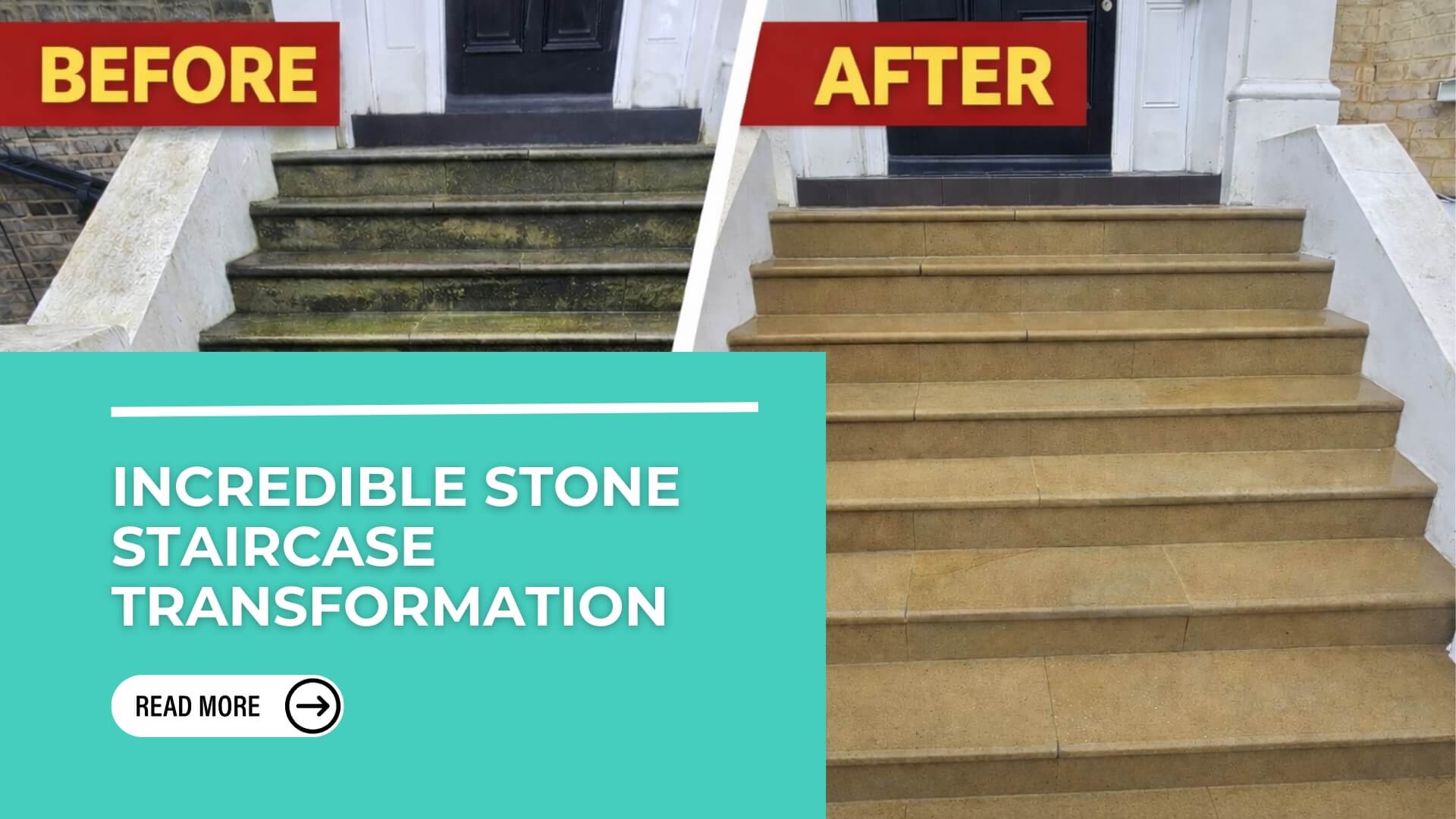

Stone staircases are one of the first things visitors see when approaching your property. Over time, however, they can become slippery, stained and discoloured due to algae, moss, pollution and general foot traffic.
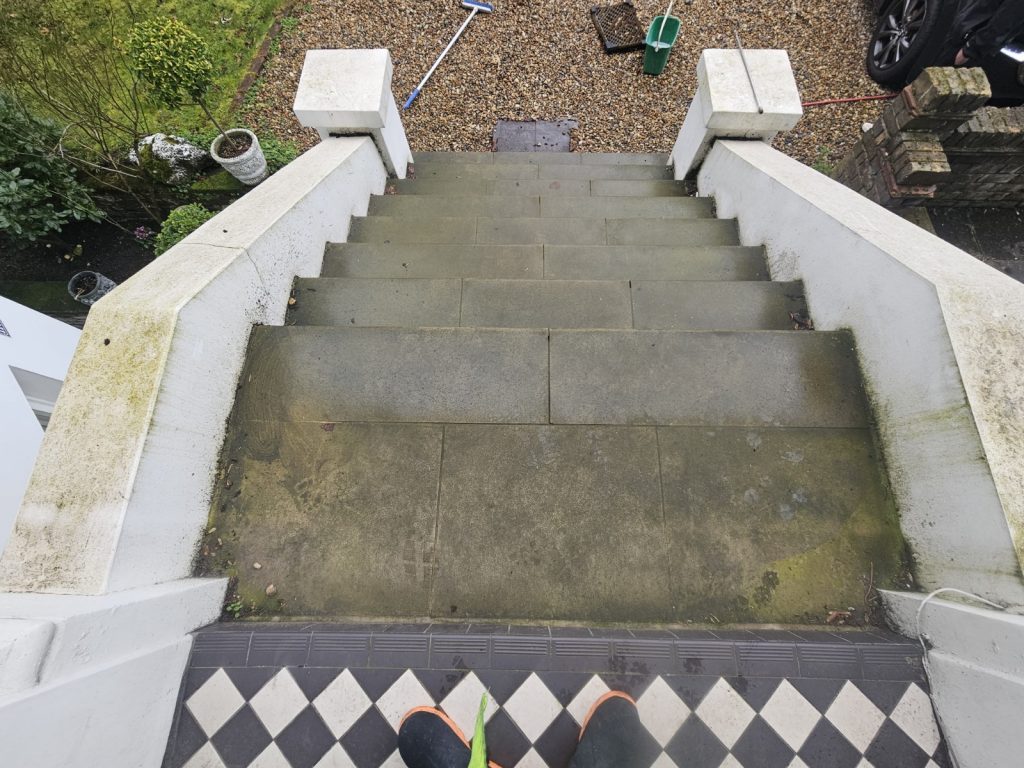
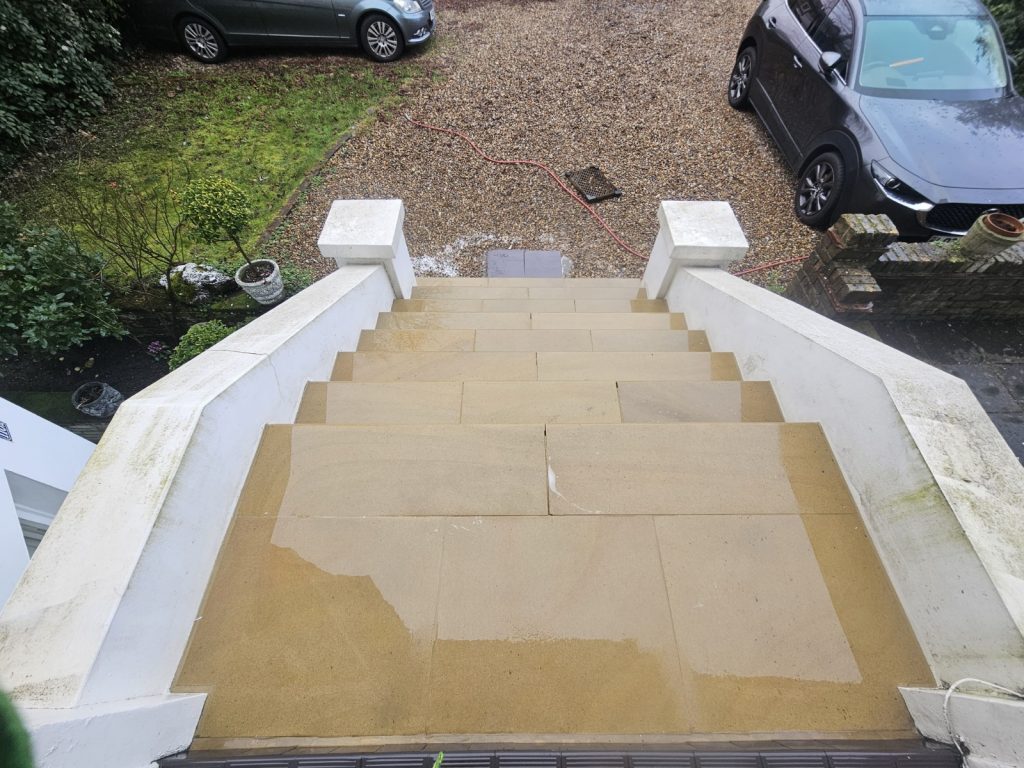
In this recent project, we professionally cleaned an exterior stone staircase that had become heavily affected by organic growth and surface staining. The results speak for themselves.
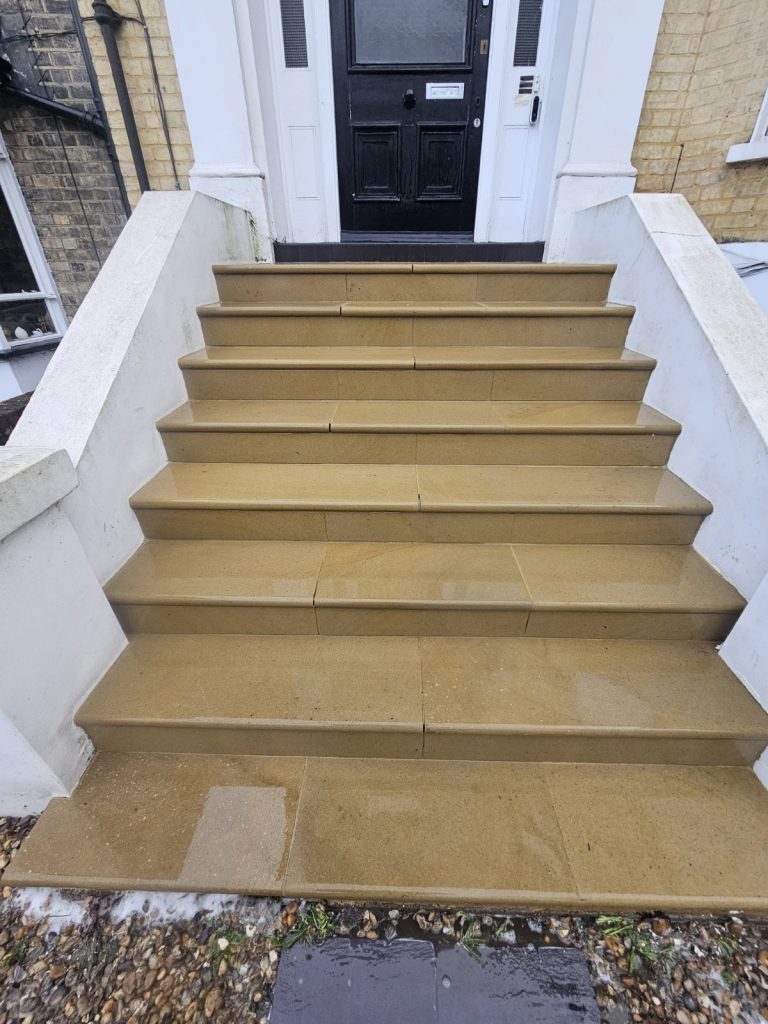
Why Stone Staircases Become Green and Slippery
Exterior stone is porous. That means it absorbs moisture.
When moisture combines with:
- Algae
- Moss
- Lichen
- Air pollution
- Fallen leaves
- Organic debris
It creates dark staining and green growth. Not only does this look unsightly — it becomes a serious slip hazard.
If left untreated, the organic growth can begin to break down the stone surface over time.
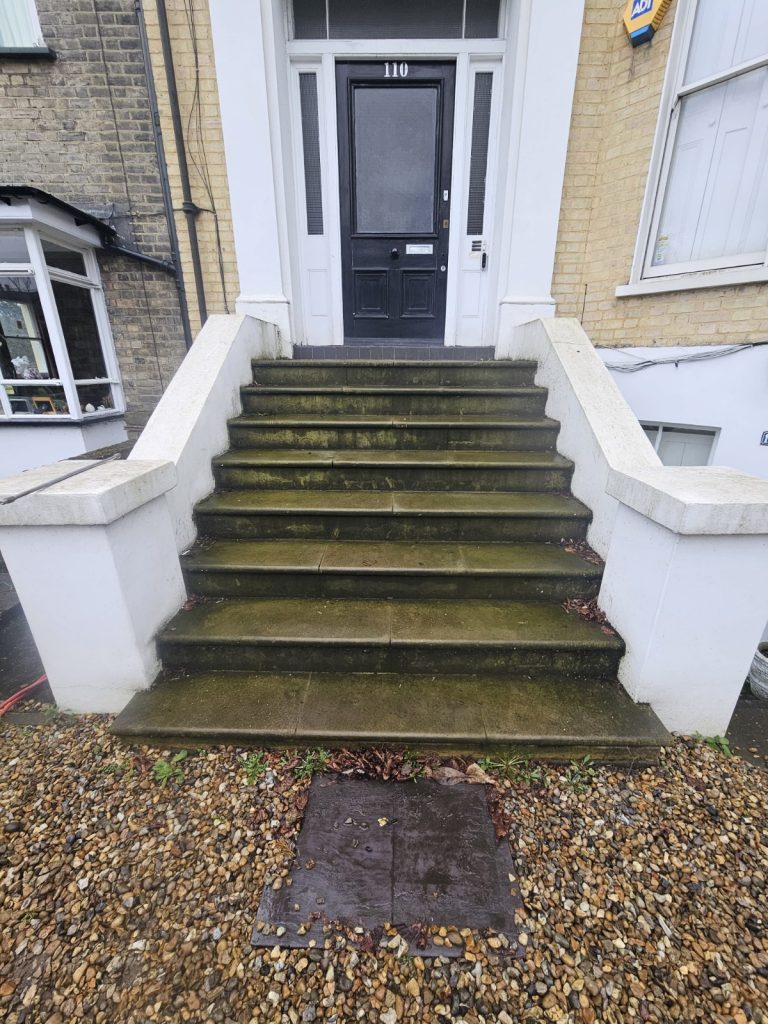
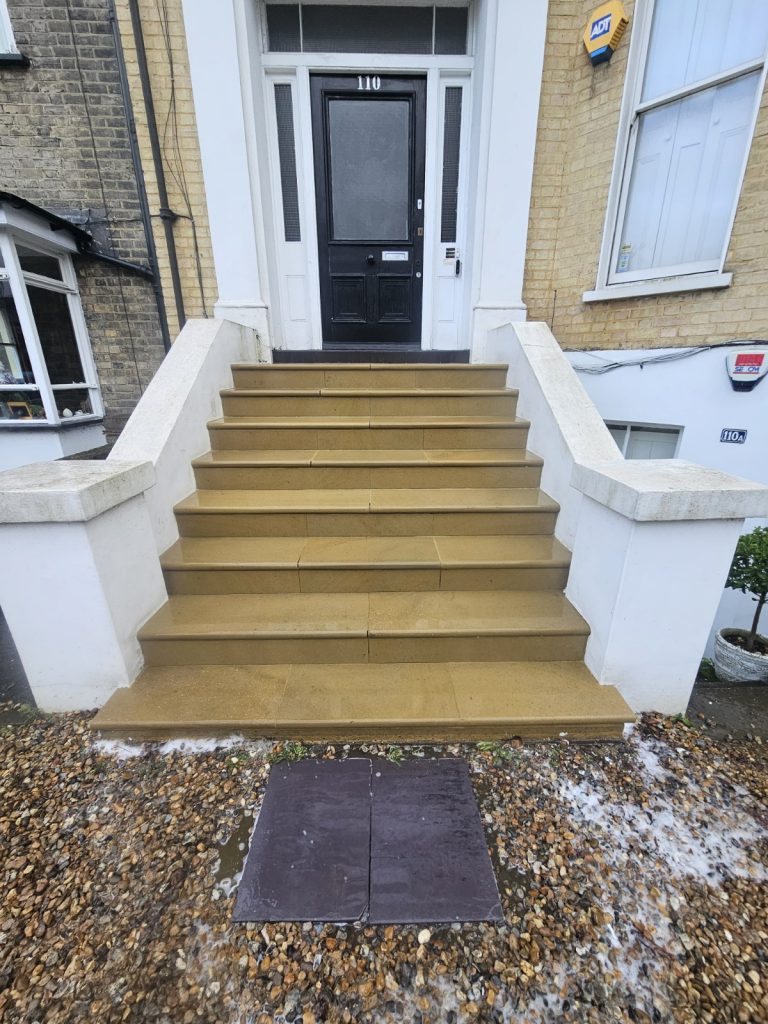
Before & After: Real Results
Below are the real results from this stone staircase cleaning project.
What Type of Stone Is Used in Exterior Staircases?
Different types of stone require different cleaning approaches.
Sandstone
Common in UK properties. Sandstone is soft and porous, meaning it absorbs moisture easily. It requires gentle cleaning methods to avoid surface erosion.
Limestone
Often used in period properties. Limestone is sensitive to acidic products and high pressure. Incorrect cleaning can permanently damage its surface.
Yorkstone
Very popular in traditional British homes. Durable but still porous. Needs specialist cleaning to avoid surface marking.
Granite
Harder and less porous than sandstone or limestone. Can tolerate more robust cleaning methods, but still requires care.
Concrete Stone (Cast Stone)
Often mistaken for natural stone. Needs careful cleaning to avoid pitting and surface damage.
Choosing the wrong cleaning method for the stone type can cause irreversible damage.
Why Professional Stone Cleaning Matters
Many homeowners attempt pressure washing. Unfortunately, high pressure can:
- Erode the stone surface
- Remove the protective top layer
- Cause pitting
- Force water deeper into the structure
- Shorten the lifespan of the staircase
Professional cleaning uses controlled methods suited to the stone type, restoring appearance without structural damage.
Is Stone Staircase Cleaning Worth It?
Yes — and here’s why:
- Improves kerb appeal instantly
- Reduces slip risk
- Extends stone lifespan
- Protects property value
- Enhances first impressions
For landlords and commercial properties, it also reduces liability risk from slips and falls.
FAQ Section
How do you clean stone staircases safely?
Stone staircases should be cleaned using low-pressure, professional-grade equipment tailored to the specific stone type. This removes algae and staining without damaging the surface.
Can pressure washing damage stone steps?
Yes. High-pressure washing can erode soft stone such as sandstone and limestone. It can also remove the natural protective layer.
How often should stone staircases be cleaned?
Most exterior stone staircases benefit from professional cleaning every 1–2 years, depending on shade, moisture and surrounding vegetation.
Why do stone steps turn green?
Stone steps turn green due to algae growth. Algae thrive in damp, shaded environments where moisture is trapped in porous surfaces.
Final Thoughts
This before and after stone staircase cleaning project shows how dramatic the transformation can be. More importantly, it highlights the importance of using the correct method for the specific stone type.
If your stone steps are looking green, slippery or stained, professional cleaning can restore them safely and effectively.
0 Comments